When the soul shakes, it is as though energy has been awakened that beckons the attention of all parts of our being. Whether we are shaken into new awareness or shattered into pieces, or both, what is unleashed within us is overwhelming. Marcus Aurelius is quoted as saying “unrest of spirit is a mark of life”. At the same time, Marcus Aurelius also stated: “The mind maintains its own tranquillity by retiring into itself, and the ruling faculty is not made worse. But the parts that are harmed by pain, let them, if they can, give their opinion about it.” In other words a shaken soul or a restless spirit must express itself without judgment, without fear, and without negativity.
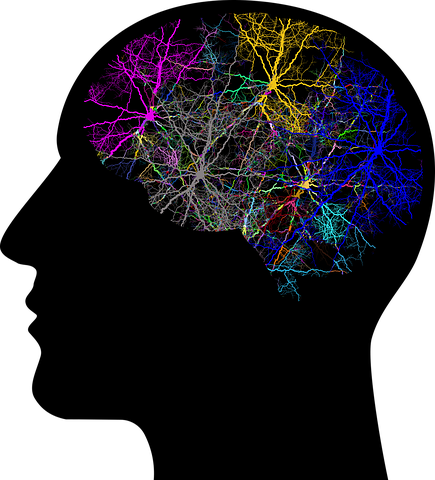
Brain
Allowing negative thoughts, feelings, beliefs and behaviors take control of our lives that extends beyond their adaptive usefulness must be prevented. This process involves heightened self-awareness and a commitment to move from avoidance to acceptance or from barriers to breakthroughs. There are many ways to develop and reinforce this commitment. Here are three: physical, mental, and emotional. Sound too simple? It is.
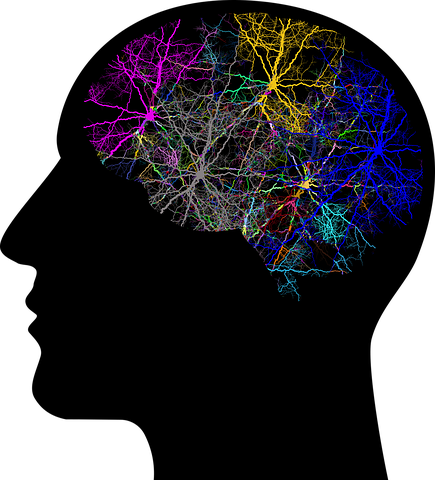
Neuron
Our brains, beliefs, and behaviors respond to repetition and reward. Integrating rituals into a daily practice will enhance self-awareness and prevent negative habits, feelings, and thoughts from cementing themselves into lived experience. Choose one small physical thing to be practiced or accomplished each day: walk, meditate, eat a piece of whole food. Choose one small thing to be mentally focused upon each day: a mantra, a poem, a sudoku or crossword puzzle. Choose a set time each day to focus exclusively on a pleasant memory that evokes a positive emotion like humor, love, peace, compassion, or gratitude.
“If you’re stuck in a rut, don’t furnish it.” I heard someone say this at a drug and alcohol treatment program years ago. And it stuck. That is, it left an impression. People, things, experiences, memories gets stuck all the time. We all get stuck in various kinds of ruts. Examples include: depression in terms of rumination, anxiety in terms of intrusive worrisome thoughts, addictive behaviors, traumatic memories, resentment, shame, procrastination, being unable to forgive oneself and others to name a few. But what does “Don’t Furnish It” mean?
Don’t furnish the rut you’re in means more than holding on to resentments, being overwhelmed with worry, being unable to let go of traumatic events, or finding oneself trapped in a cycle of addiction. Not furnishing the ruts we find ourselves in means raising our awareness of the way we add stuff to the thoughts, feelings, behaviors, beliefs, and memories we experience. It means cluttering ourselves with miscellaneous add-ons we think are helping “tie the room together” (The Big Lebowski reference) to the point where we can’t even move. Resentment literally means “to feel again”. And to reference the same classic (one of my all-time favorites) movie again “we are talking about unchecked aggression here”…towards oneself, others, and the world.
The solution seems all to simple: unfurnish the rut. This means clean house, declutter, let go, give up and get out, surrender, ask for help, and pursue a new path. Yes, this is easier said than done but it may not require a psychic shift, a bottoming out, or an earth-shattering event. For so many people, getting unstuck comes in the form of a “pivotal mental state“, an “Aha! experience“, and or sudden gains in psychotherapy. The goal of this brief blog is to offer hope. The human experience is so difficult for so many. Getting unstuck seems like an impossibility, a distant dream, or unthinkable when we are deep in the struggle of life. Be kind to yourself. Pause. Breathe. Things will change.
The pandemic pause places our public and private lives in a pernicious position, and a precarious one at that. Pernicious because of it’s harmful effect on our systems and our psyche especially in a pronounced and prolonged way. Precarious because each day we experience insecurity, and the real or imagined likelihood of social or personal collapse in one way or another is completely dependent on factors outside of our control, like other people’s behaviors, policies, pharmaceutical companies, and more.
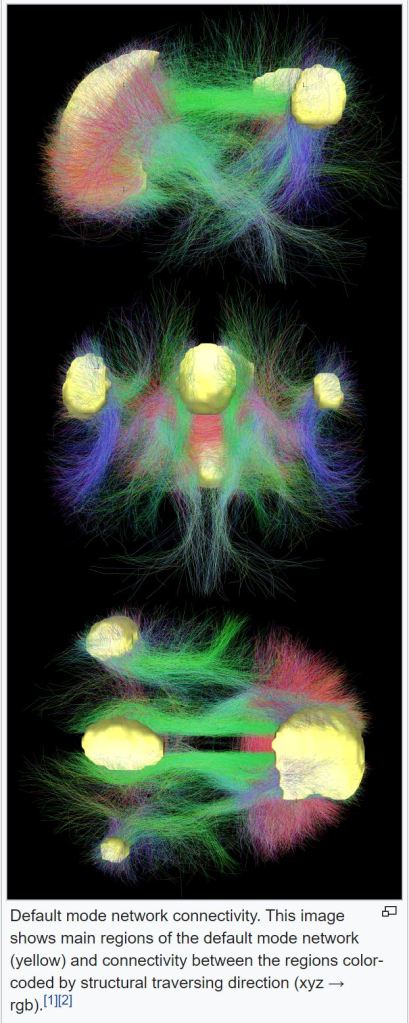
Psychedelics and Default Mode Network (Carhart-Harris et al.)
Our brains, just like society, being forced into an uncomfortable state, are desperately trying to find connections and to discover things about ourselves and our world that seem to add to our sense of dis-ease. And, whether on the individual level, family level, or at the level of our communities and our country, we are called to greater compassion, understanding and helpfulness in order to whether this (hopefully) last phase of the pandemic. Are we finding signs that we will emerge from the pandemic pause with new perspectives and newly discovered persistence that prepare us to get through anything?
No. Not yet. Or, if there are signs that we’ll come through changed for the better, they are subtle. Sure, we’ve seen the rise of psychedelics in research and popular media. We have a new President (but from the old school entrenched political arena). While pre-pandemic we worried about the warnings of “too much screen time”, we now welcome social media, zoom and many ways to connect other then in-person. The world is changing. It always has. It always will. As the saying goes…something like: nothing is constant except change? Perhaps the pandemic pause is preparation for purposeful propulsion into the future of humankind.
Photo from Polaris Insight Center Ketamine Training
Allis Wellis returned again and again to a basic truth: All Is Well. Julian of Norwich (of Juliana as Wikipedia states) is credited with the following invocation, prayer, or reading: “All shall be well. And all shall be well. And all manner of thing shall be well.” Taken in or out of context of Christian theology, of which Julian of Norwich is well-known for her exceptional devotion and faith, the clarity, wisdom and strength that this mantra offers Allis Wellis is profound.
Saint Juliana of Norwich
Collectively we all seem to be facing certain perils: climate crisis, pandemic, economic instability, deaths of despair. The level of uncertainty that we are confronted with on the daily seems endless and many are growing weary of living one day at a time without knowing what to expect next. This is one of the most unsettling, even traumatic, experiences humans can experience: not knowing what’s coming next and not knowing how long this feeling of chronic uncertainty will last.
But, as American Author Ursula K. Leguin once said: “The only thing that makes life possible is permanent, intolerable uncertaintly; not knowing what comes next.” Combining the wisdom of these two very different women who lived at very different times and went through very different life struggles, Allis Wellis continuously returns to a basic, perhaps universal, truth that a steady belief in the overall wellness of things in the face of the steady uncertainty of all things is the sweet spot of a well-lived life.
Social media is as much of a wonder as it is wicked. Many of us get sucked into the vortex of attention grabbing yet awareness-sucking online activity via Twitter, Tik-Tok, Facebook, LinkedIn, Instagram and more. Occasionally, we make valuable connections, experience meaningful insights, and learn new things. One thing that held my attention on Twitter (@animal0lovers Nature and Animals) recently was what I dubbed The Hummingbird Whisperer.
I have always found hummingbirds fascinating though never spent any time seeking to learn more about them. I remember attempting a slo-mo video with my IPhone some time ago, to capture my own footage of what a hummingbird looks like in slow motion. And, as I write this blog post, themes of attention, capturing moments, slowing down, awareness, curiosity, and the like all come to mind. Perhaps a message here is that when something captures one’s attention, we can allow it to be a reminder or a cue to slow down a little and observe what is happening in the moment, inside and in the world around us.
This brings up the tendency there is to find meaning in things that present themselves in our day to day that seem curious, novel, or that offer a moment of pause to reflect. Often, when I see an animal in an unexpected way during the day, I will look up the meaning at http://www.spirit-animals.com. Here is what I found for hummingbird:
“Hummingbird symbolism is reminding you that it is time for you to pursue your dreams more aggressively. By doing this, you will make them a reality. In other words, this spirit animal portends that joy is just around the corner. Therefore, like the colorful Jewel Beetle, you have to believe that it is possible to manifest your dreams now. Stop waiting and go for it! Alternatively, Hummingbird meaning is letting you know that you can go anywhere you need to go. The only obstacle in your way is yourself. Furthermore, opportunities are manifesting quickly for you right now. Thus like the Heron, Hummingbird symbolism prompts you to seize them as fast as possible before they are gone.”
You know you’ve reached The Tripping Point when you:
Are reading this blog
Have used psychedelics
Are considering using psychedelics
Want to learn more about psychedelics
Have been reading a lot about psychedelics
Have seen media and social media on psychedelics
Have had mystical experiences without using psychedelics
Believe there is more to understanding than our sensory awareness
Believe the universe is made of energy and vibration that influences everything
Know that it is time to grow, change, expand and deepen your understanding of everything.
Are eager to read a book called “The Tripping Point” when it is published because it offers a brief yet deep guide to the core themes that arise when one ventures into the realm of psychedelic culture, medicine, experience, and potential for transformational change at the individual, community, global and universal level.
Stop being yourself. From birth, even from conception, the molecules that make up “who we are” connect and evolve to form our understanding of ourselves, others, and the world around us. On a biological level we can see this happen through a microscope and then outwardly in visible physical changes. This is more difficult to “see” on a psychological, social, or emotional level. Changes are constantly taking place in our minds that influence our thoughts, feelings, and behaviors as well as how we relate to others. Yet it is widely accepted that our experiences from birth through some point in childhood, adolescence and even perhaps across the lifespan contribute significantly to who we think we have become, who we are, and who we will always be. But what if it isn’t true? This sounds strange. I know. Follow me.
What if we quieted the mind in such a way that we think, see, feel and perceive ourselves and the world differently? There is a concept called the Default Mode Network (DMN), a normal system based on survival, which consists of the familiar or patterned ways of communicating within the brain that blocks out distractions in order to optimize daily functioning. The DMN connects experiences from past, present and future in order to help us recognize “this is a screen”, “this is my hand”, “I can ride a bike”, “people are humans like me”, etc… When the DMN is interrupted in some way, opportunities arise to make new associations or think, feel, see, and understand oneself and the world differently. The renaissance happening in the field of psychedelic substances is shedding more light on this as in this article here: “Me, myself, bye: regional alterations in glutamate and the experience of ego dissolution with psilocybin”.
The suggestion of “Stop Being Yourself” refers to self-awareness. We may not be who we think we are or who we’ve recognized ourselves to have become. We are likely so much more than who we think we are. I believe we are. Peeling back the layers of who we think we are and becoming open to the more vast, intelligent, kind, and relational being we are is a journey we can all be on. Shedding old ideas, inviting transformation, discovering new realizations or epiphanies daily – these are not only worthwhile, they can become very “why” that brings meaning to life, death, and everything in between. Stop Being Yourself because you are so much more!
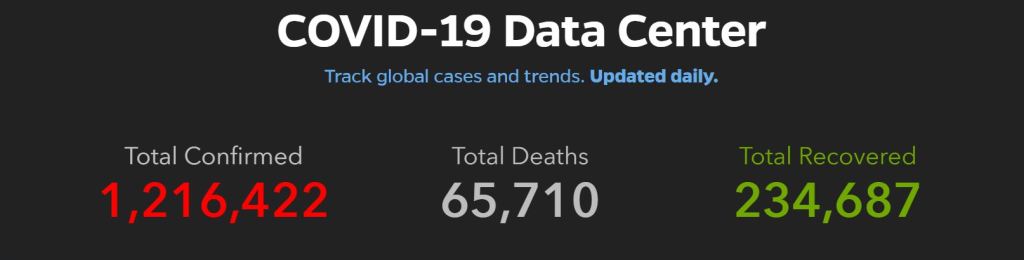
COVID19 – There is nothing familiar and lots to fear as we live (and die) through this pandemic. As of this writing (4/5/2020), here are the stats according to the Johns Hopkins University&Medicine Coronavirus Resource Center https://coronavirus.jhu.edu/. Within a few days global deaths will have shot past 100k. The U.S. alone is expected to far exceed this number by early summer 2020. There is plenty of fear and an effacement of the familiar. What are we left with? What can we do? Where do we go from here?
With the fulmination of fear and the stripping away of the familiar, we are left with a soon-to-be-forgotten past, a present moment that is at once perilous as it is filled with perspective, and the foreshadowing of a future that is both foreboding and perhaps even fascinating. The gravity of the content and context of our current lives cannot be more severe. And yet, even within the most dire of circumstances, we are called to cultivate more than just “corona anxiety”, “collective trauma”, or a “quagmire of quarantine quandaries”. Yes there are things we can do: Help others, focus on ourselves, embrace the fact that we are #InThisTogether. This trifecta is a holy trinity of sorts.
Described so well by Simon Sinek in this YouTube video, in seeking solutions to selfish concerns, we are immediately blinded to helping someone else. But by directing our attention to help someone else solve their problem, we wind up solving our own. Paradoxically, by helping others first, we free up space and find more energy to focus on our own personal growth. Once these steps are taken, we find that it is easy to begin to embrace the entirety of the Beloved Community. This concept was brought into public discourse by Martin Luther King, Jr. as described here: “For Dr. King, The Beloved Community was not a lofty utopian goal to be confused with the rapturous image of the Peaceable Kingdom, in which lions and lambs coexist in idyllic harmony. Rather, The Beloved Community was for him a realistic, achievable goal that could be attained by a critical mass of people.” During the current and all future pandemics, we will be called back again and again to helping others, focusing on ourselves through self-care and self-discovery, and universal compassion.
The fear we feel and the affinity for the familiar are only our friends when they guide us to face our vulnerability as well as our forgotten parts. Uncertainty and the unknown is the new normal. To live in a perpetual state of “I don’t know” may lead us to more love, more joy, and more freedom that wasn’t even on our radar. Let us release fear. Let us abandon the familiar. Let us live, move forward, and die with grace and #lovingkindness.
It arose from a meditation: Clarity, Charity, and Prosperity. It has a nice ring to it. Not only does it rhyme, but it’s reasonable. Not only does it pack a punch, but it is also profound. We all go through the ups and downs of life. Whether we are up or down or find ourselves in between, we may find focus by recalling the fundamentals of Clarity, Charity, and Prosperity. Let’s develop these concepts further, shall we?
First: Clarity
Clarity means awareness. It means seeing things in higher definition. By invoking clarity, we can sort through the muck and mire of life’s challenges. Clarity enables us to illuminate the essence of ‘the stuff of life’: feelings, people, situations, experiences, environments. Clarity means deepening one’s perspective and looking at life from various angles. As Johnny Nash wrote and sung, “I can see clearly now the rain has gone. I can see all obstacles in my way.” With clarity, we rise above the clouds and see and feel things very differently from when we are down in the valley or surrounded by the fog of life. By continuously cultivating clarity in our lives we can grow and change in consistently positive ways.
When we think of charity we think of giving and receiving money or of organizations doing good work for others and asking for resources to do such work. For example: Have you given to charity? What’s your favorite charity? But charity means so much more! Life simply being of service to others, adopting a charitable world view or a kind and forgiving spirit towards oneself and others. Being charitable means being accepting of oneself and others. It means being far less judgmental or even non-judgmental. It means giving the benefit of the doubt instead of being negative or overly critical. By embodying a charitable attitude, we can enhance our self-worth, our sense of openness and positivity in our lives, and add meaningful value to the world in service of care and compassion.
Again, when we hear the word prosperity we think money. Being prosperous is associated with financial success and wealth. But let’s think about prosperity in broader terms. From it’s Latin root, prospero “I render happy”, or to grow, to thrive, to do well. To be prosperous signals doing well in mind, body, and spirit. It means to be successful, and of course this can mean to be financially successful or abundant but also to be successful and abundant in all the good things life has to offer us: health, family, friends, activities, and inner and outer wellness.
Putting it all together: Clarity, Charity, Prosperity
Now, as we look at prosperity in a new light, let’s think about the previous two concepts of clarity and charity. By developing more and more clarity in our lives, we hone in on things that feel good to us and identify more quickly the things that don’t feel so good. Some things that don’t feel good are obstacles, judgmentalism, negativity, fear, and the lack of freedom. This is where charity comes in to play. We can be more charitable in our attitudes towards ourselves, others, and the world at large by being of service, through forgiveness and by always giving the benefit of the doubt.
In our quiet moments through meditation, listening to music, going for a walk, caring for our animals and for each other, driving in our cars, being in nature, we can access thoughts, feelings and experiences in our minds and hearts that generate creativity and good vibes. The trifecta of Clarity, Charity, and Prosperity is but one example of a kind of mantra that I hope inspires you in your lives as it has in mine. Thank you.
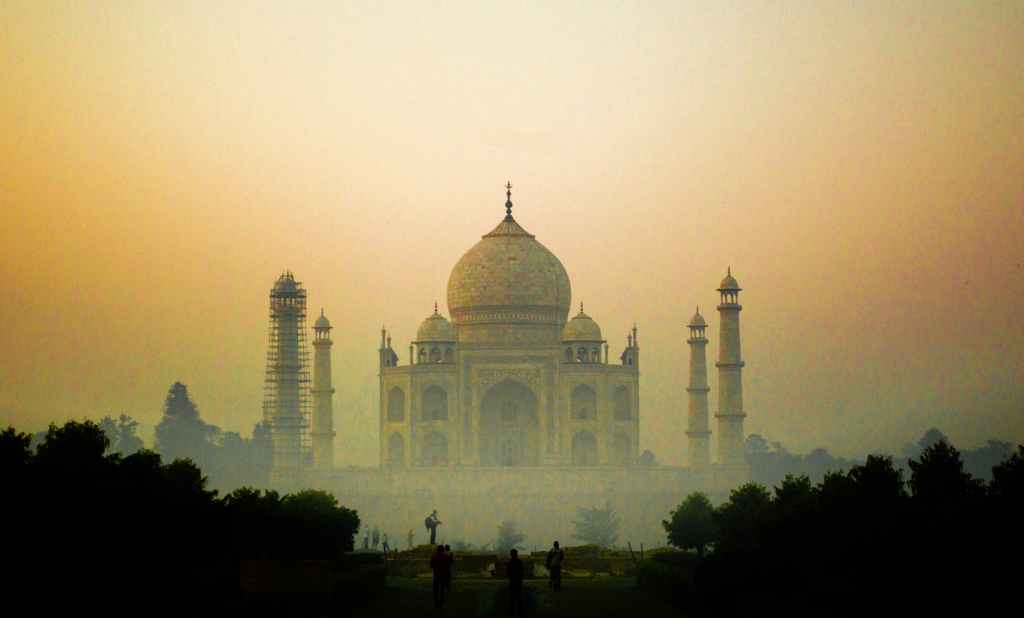
The Taj Mahal of Self-Sabotage, what I like to call “The Sabotage Mahal”, is the absence of self-love. It is in loving ourselves fully that we find an expansive source of power that itself is love, freedom, joy, connection, and growth. The Taj Mahal itself, one of the most iconic and recognizable structures in the world, was built from the inspiration of love itself, as a monumental symbol of love (in this case between two souls), and a reflection of the power of love to produce such a magnificent structure.
There may exist in each person, as they progress through the maturation process from infancy to adulthood, a mechanism that generates power from increasing the distance between our essence of self-love and personal autonomy or independence. It is well documented that in order to survive the maturation process, a baby embarks on a process of discovering his or her separateness. This process results in two seemingly disparate yet fundamentally connected experiences: loneliness and identity. As the gap widens over the course of life from childhood to adolescence, from adolescence to adulthood, from adulthood to old age, and from the final years of life to death, our sense of loneliness and identity is always there often nudging us to wonder if something is missing. This subtle or blatant sense that “something isn’t quite right” may direct all of our thoughts, feelings, behaviors and interactions with others and the world around us, leading us either towards or away from self-love.
On our journeys to re-discover our essential being of pure love, we must recognize that the blockages that present themselves, and that result in repeated experiences of self-sabotage or “getting in our own way”, are really building blocks that help us find our way back to who we really are. As soon as we recognize these obstacles as cornerstones to growth and positive change, our relationship to ourselves, others, and the world around us changes. We begin to see symmetry, beauty, and magnificence all around us because we have all the love and power we need right inside.















 Health, Mental Health, Addiction